Beginner Golf Range Practice: A Simple Session Plan
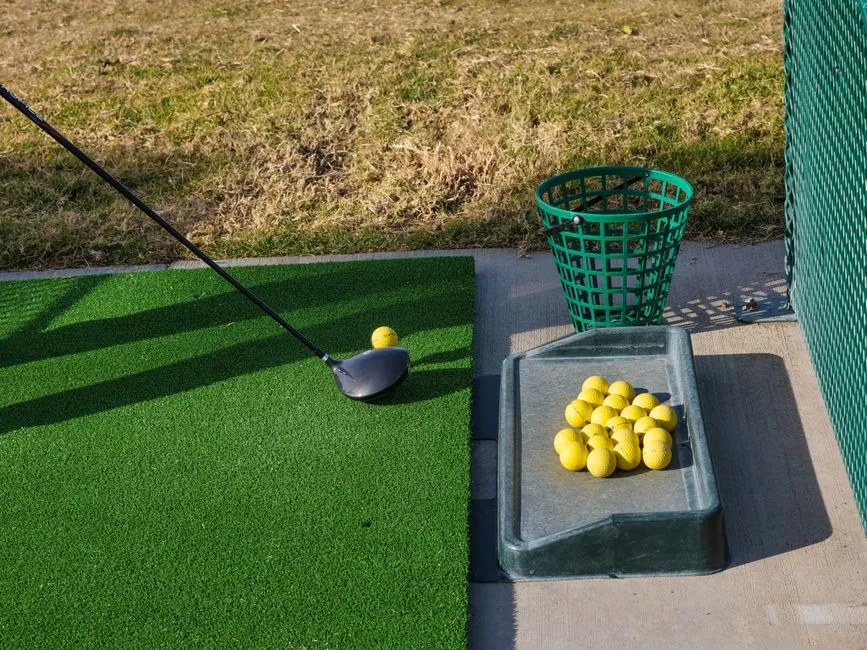
Give the bucket one job before hitting the first ball
A useful beginner range session has four parts: warm up without rushing, practise one simple contact or direction goal, change clubs while keeping that goal, and finish by simulating a few shots from the course. Use small batches and pause to observe rather than hitting every ball at the speed of a malfunctioning popcorn machine.
Stop if movement causes pain, dizziness, or unusual symptoms. Golf instruction cannot diagnose an injury; medical concerns belong with a qualified healthcare professional.
Check the range setup and boundaries
Follow posted rules and staff directions. Confirm which bays, mats, grass areas, targets, and clubs are permitted. Stay behind the designated hitting line when others are swinging, and never walk into the range to retrieve a ball or tee.
Before each swing, make sure no person, bag, divider, ceiling, wall, or loose object is within the club’s path. Check behind you as well as ahead. Secure children and non-playing guests in the appropriate area.
Browse practice basics for routines that begin with a safe setup.
Warm up with motion, then short shots
Begin with comfortable movement rather than full-speed drivers. Make easy rehearsals and short swings with a lofted club, paying attention to balance and whether anything hurts. Gradually lengthen the swing only while it remains comfortable and controlled.
Hit a small group of short shots toward a broad target. The first goal is not distance. Notice whether the club contacts the ground in a repeatable area, whether the strike feels centered or harsh, and where the ball begins.
Avoid copying an aggressive stretch or speed drill from a stranger. Bodies, limitations, and instruction needs differ.
Choose one observable practice question
“Get better at golf” is too large for one bucket. Choose something you can observe today:
- Can I finish in balance?
- Can I start most short irons inside one wide target corridor?
- Can I make the same pre-shot routine before each ball?
- Can I strike a tee or mark in a consistent place without a ball?
Work in batches of three to five shots, then step back. Record the starting direction, curve, contact, and finish balance without turning one bad shot into a complete personality review.
Use a simple feedback table
| What happened | First thing to check | Next action |
|---|---|---|
| Contact changes wildly | Setup and ball position | Rebuild slowly before another ball |
| Ball starts left or right | Clubface and alignment | Use a safe ground reference if permitted |
| Balance disappears | Effort and finish | Make a shorter, easier swing |
| One shot is excellent | Whether the process changed | Repeat the same routine, not the celebration |
These are observation prompts, not a complete swing diagnosis. A qualified golf professional can see factors a short article cannot.
Change clubs without changing the entire goal
After a useful short-iron batch, move through a mid-iron, a comfortable longer club, and then a tee club if appropriate. Give yourself rehearsal swings between changes. Club length and ball position may change, but keep the session’s main question stable.
Do not hit every club simply because it lives in the bag. More variety is not automatically better practice. If contact deteriorates, return to a shorter swing or a club that helps you rebuild the intended motion.
Add random practice near the end
The course rarely asks for eight identical shots in a row. Finish with a short imaginary sequence: choose a broad “fairway” target, then a different target for an approach, then a small pitch. Go through the full pre-shot routine and change clubs each time.
This is a planning exercise, not proof that the shot will behave on the course. Note which decisions became rushed. Our guide to reading a golf scorecard helps connect practice to the shape and information of an actual round.
Keep a tiny session note
Write the date, the one practice question, what improved, what remained inconsistent, and the first task for next time. Avoid declaring a permanent fix after one bucket. Range mats, weather, fatigue, club choice, and simple variation all affect results.
Finish while enough attention remains to handle equipment safely. Check that the range is clear before collecting the bag, and leave balls where staff instruct. A good beginner session produces one useful observation and a reason to return—not sore hands and a bucket that somehow won.